Energy Milestones
The global energy landscape is undergoing an exponential shift. Levelized costs for utility-scale solar and non-lithium grid storage have fallen well below fossil-fuel baselines across every inhabited continent.

The Abundance of Sodium-Ion Battery Infrastructure
By replacing scarce cobalt and nickel chemistry with earth-abundant sodium and iron ferrocyanide cathodes, grid operators have eliminated the geopolitical bottlenecks associated with lithium mining. Sodium-ion battery enclosures operate smoothly across temperature swings from -30°C to +50°C without runaway fire hazards.
Utility plants from Texas to Tamil Nadu are deploying gigawatt-hour utility batteries that absorb mid-day solar peaks and inject uninterrupted current into municipal grids throughout the twilight peak demand window.
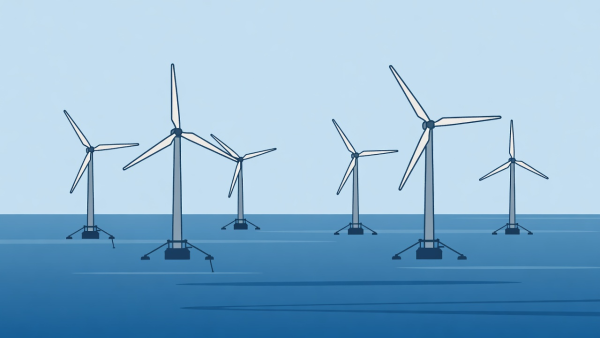
Deep-Water Floating Offshore Platforms
Tension-leg floating platforms now anchor multi-megawatt turbines in water depths surpassing 300 meters, unlocking the ferocious wind currents of the North Sea, the Celtic Sea, and the Pacific Rim.
Because these arrays reside 35 kilometers beyond shorelines, they eliminate coastal visual concerns while capturing high-velocity capacity factors exceeding 64%. The underwater anchoring cables double as artificial reef structures, promoting mussels, barnacles, and nursery zones for juvenile sea bass.
The Global Phase-Out of Thermal Coal
In parallel with rapid renewable deployments, legacy fossil generating units are entering accelerated decommission pipelines. Over 310 gigawatts of obsolete thermal capacity were permanently disconnected between early 2024 and mid-2026, with retired coal turbine houses converted into district heat exchangers and clean synchronous condensers.
Economic imperatives now reinforce ecological necessity: building brand-new photovoltaic and wind installations is demonstrably cheaper than simply paying for fuel and maintenance at existing thermal facilities.